

Greetings fellow human,
Here we are, another week in review is upon us. Lots to cover, so let’s get stuck in.
First up, the three most shared videos, all of course excerpts from the Somatic Academy program: ‘The Defense Cascade - What if the Body Was Trying to Save You?’
The third most shared video covered a study of children who were graded as being insecurely attached to their parents. Researchers wanted to compare their response when engaging in a stressful task with either a friendly stranger or a dog. When the children completed the task with a dog, they released 75% less cortisol than when they completed the task with a friendly stranger. Let’s remember what moves inversely with cortisol: oxytocin. Oxytocin has also been linked to child-dog interactions and even to the frequency of pats. Why aren't the kids getting the same response from friendly adults? Because other adults are fractals of parents. If our body (not our minds) doesn’t trust our parents, we struggle to trust all humans. That’s why adults who were insecurely attached to their parents as infants decades later show much higher levels of jealousy with their partners. Dogs, on the other hand, shower us with oxytocin and unconditional love. What is oxytocin a proxy for? Endorphins. What do endorphins do? They generate the self-other blur where two become one. What gates that? Personal distress scores. Until we gain the cultural strength to recognise that children are mirrors unto us, that their undesirable behaviour is a by-product of physiological separation, we will never solve the youth anxiety crisis. Until then, animals, as they always have, provide a temporary safety net.

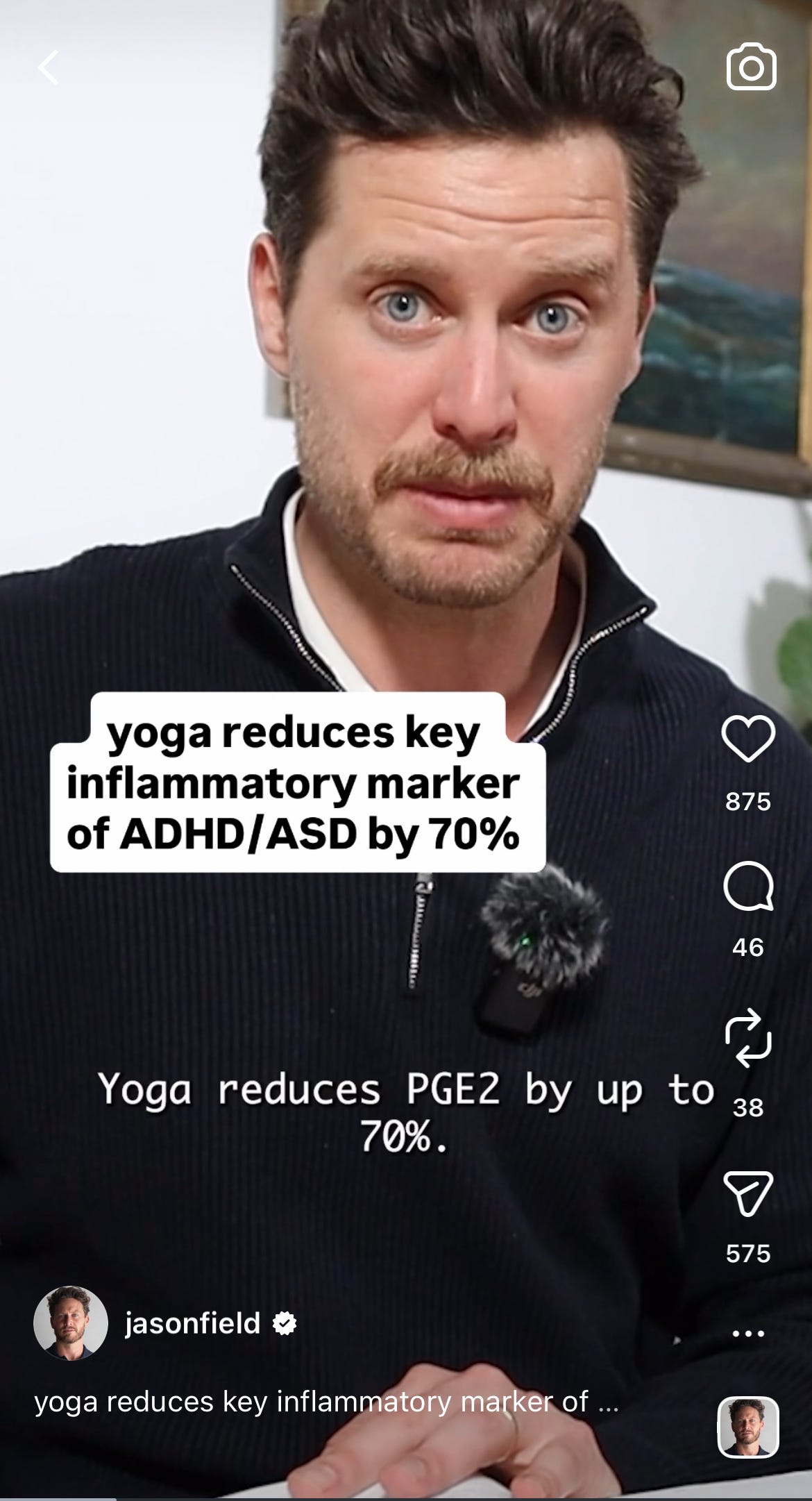
The second most shared video touched upon the most swept under the rug data we have to heal ourselves: inflammation. PGE2 levels are positively associated with sensory sensitivity, social avoidance, hyperactivity, repetitive behaviour and impulsivity. Where have we seen that behaviour before? Of course, ADHD/ASD. We shouldn’t be surprised to hear there are sky-high levels in those conditions. What drops those levels? Yoga, by 70%. Some further context to the 1/3 drop in ADHD symptoms from the yoga intervention for kindergarten children we talked about last week. What raises PGE2 levels? An interesting example is COVID (especially long COVID). So that big spike in ADHD/ASD diagnoses we experienced wasn’t a blossoming of healthy variations, as we were all locked up. It was our bodies on fire. Did we recognise that? No, of course not, because we ejected the cultural thumbdrive. Instead of helping people down the defense cascade, we encouraged acronyms on bios and promoted asking strangers to like us. One prevents our healing because symptom reductions no longer become a target, and the second exports our sovereignty to people we can’t control. Not behaviours of a species in a state of abundance.
The most shared video was one recounting the earliest known reference to autistic behaviour in history. It is believed to be medical notes from the Sui dynasty in China, and this behaviour was directly linked to maternal prenatal distress. We knew 1,500 years ago, as we know today. There is a dose-dependent relationship between maternal prenatal stress and both ADHD and ASD risks. Why don’t we speak of it? Because we don’t prioritise downregulation, and we have forgotten how to downregulate in the first place. Normal outcomes when we believe that our health is individual and cognitive rather than collective and body-led.

Next up, work in progress.
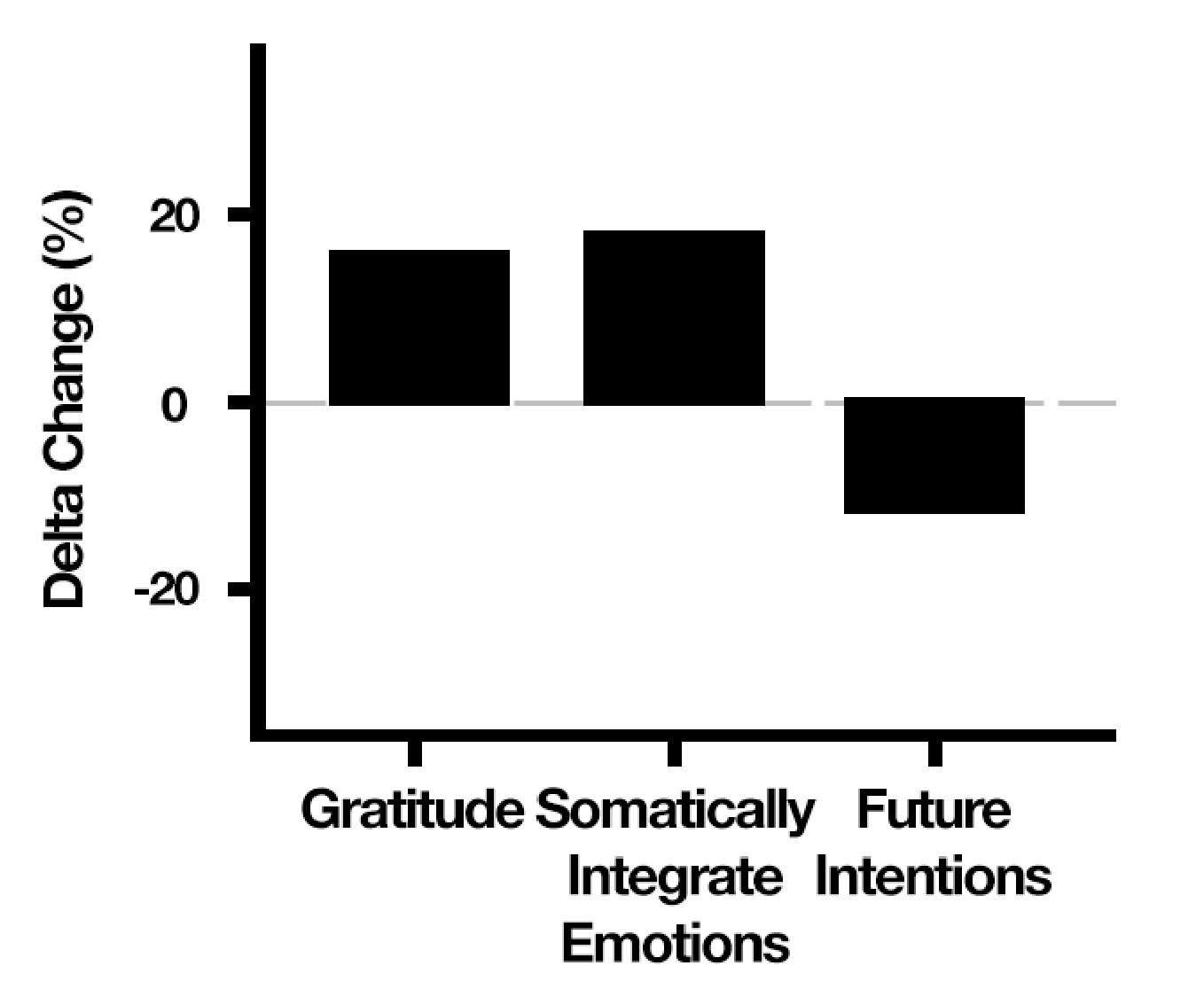
What’s a common question we get at therapy? Perhaps something such as: what is one thing you could do for yourself next week that may support you? What would that do? It would reduce delta brain waves. What increases delta waves? Expressing gratitude and feeling out emotions in our body. Why do we want delta waves? Because they help clean our brains of toxins. Who is most clogged with toxins? People diagnosed with ADHD/ASD. Which means we already have the answer to what we should do. Practice loving-kindness meditations and don’t try to outthink a feeling.
Which brings us to our monday meditation. This week, we are focusing on sensory rebalancing. In our modern world, we significantly overallocate our credits to visual attention. We have more senses, and when we forget to use them, we tend to start relating to ourselves via external people and stimuli, not what we feel inside. This plays a big part in our disemobiment. By returning to our senses, and doing so in relation to what arises within, rather than to us, we start to build a safe harbour to return to in the body, rather than relying on distraction/control/soothing to overcome each momentary departure from homeostasis.

I’ll leave it there for now, wishing you success for the week ahead and, as always, here’s to your healing 💙,
Jas