

Greetings fellow human,
Another week almost done and dusted. The WSL just wrapped up in Tahiti with some incredible moments. Hope you’ve found a few reasons to smile.

Let’s review the most shared media pieces, excerpts from program 2 in the Somatic Academy: ‘What if Love Was Your Highest Expression? Why Separation Is the Root of Our Suffering and How the Body Can Save Us:
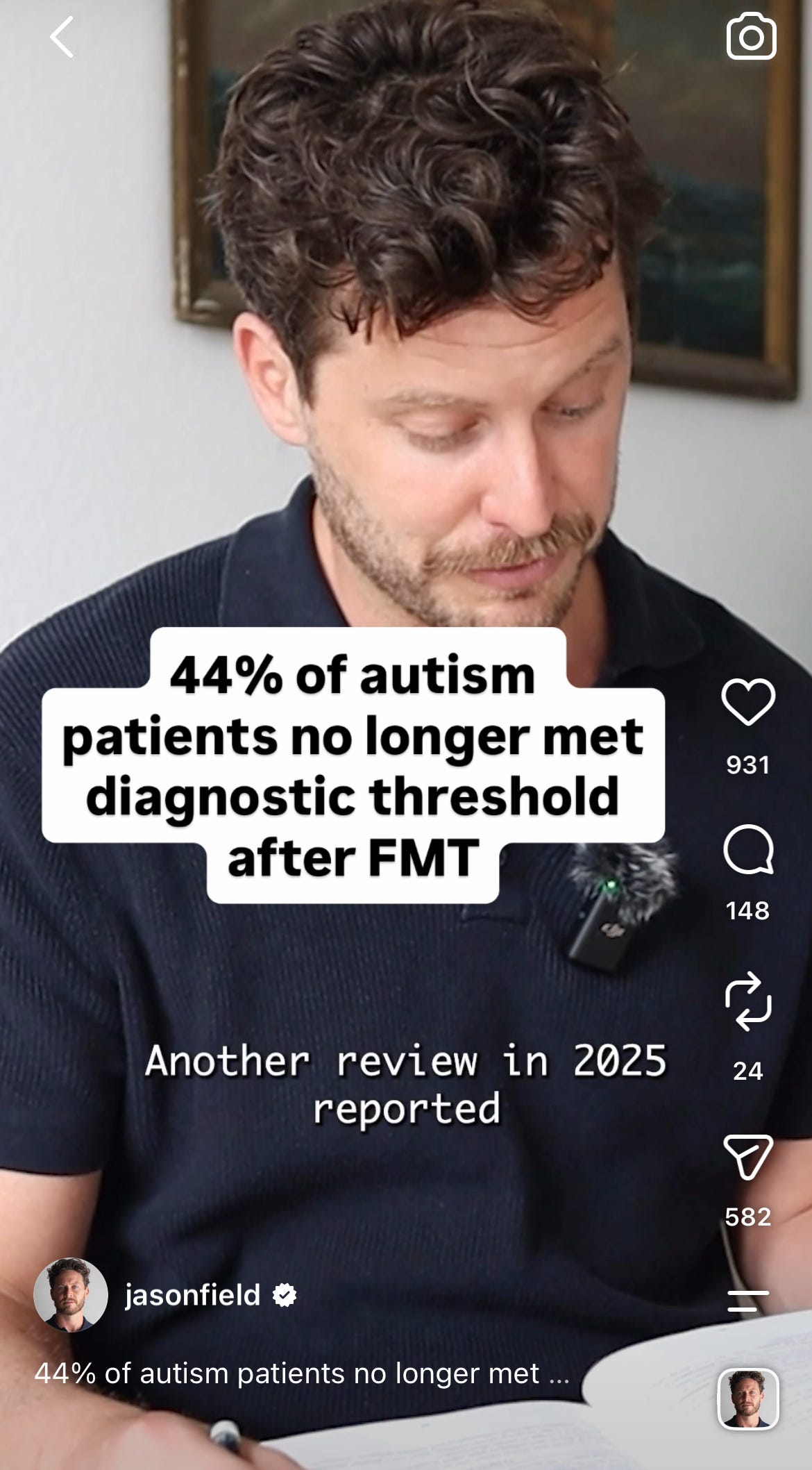
The day will come not too far from now, when the class action of common sense brings together all the people who were involved in the abuse that is the neurodivergent movement. They will be asked: Here is the data we held at the time, why did you do it? Why did you sacrifice children for your ideology? Advocacy groups receive millions in taxpayer funds to write policy for government that is installed in classrooms, and parents/teachers/students believe is conducted in good faith, yet their entire strategy is conducted on the belief that autism (and ADHD) is simply a healthy variation of human expression. It’s not. It’s trauma. Any psychologist practising ‘neuro-affirming care’ can book an early-bird flight to the class action, too. Reason number 474637363 for today was the most shared video covering the results of fecal microbiota transplants. A technique, as Somatic Academy students will be well aware, stretches back to the Romans, yet we pretend we magically invented it in 1958. The hamster wheel of history on display again. Anyway, the results. Meta-analyses of these interventions show strong benefits. One study included a 2-year follow-up and reported continued symptom improvement and loss of diagnosis in 44% of patients. What do we do with that information? We say that the gut is quite capable of remodelling the brain, and the behaviour we observe in autism can be produced/turned off by that remodelling.
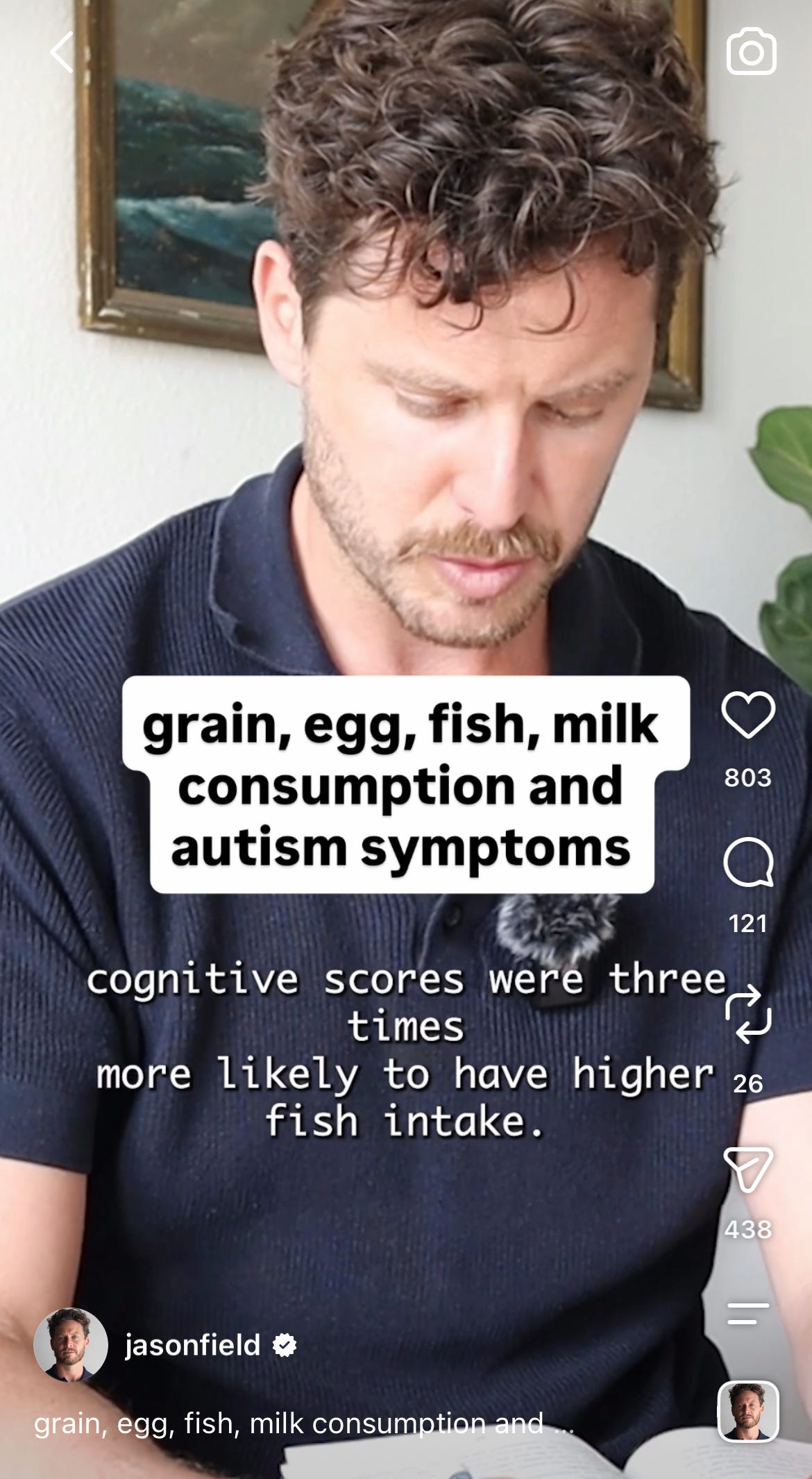
Which leads us into the next most-shared video. Children with the most severe autism symptoms were 9 times more likely to be consuming grains daily. This helps us construct one pathway. Intestinal permeability is far more likely in people diagnosed with autism than in the general population. That leads to inflammation, which upregulates excitatory synapses and impairs glymphatic clearance. Impaired glymphatic clearance leads to blood-brain barrier leakage, allowing wheat peptides to attack endogenous opioid receptors. Remember, if we turn these receptors off in experiments, healthy adults start acting autistic. Is that the only autism pathway? No. But if repairing the gut and limiting grains show improvements, we take the wins that come from personal responsibility for the bodily vessel. That certainly didn’t come from chanting about inclusive environments, because the world will always feel non-inclusive with pools of toxins in our brain.
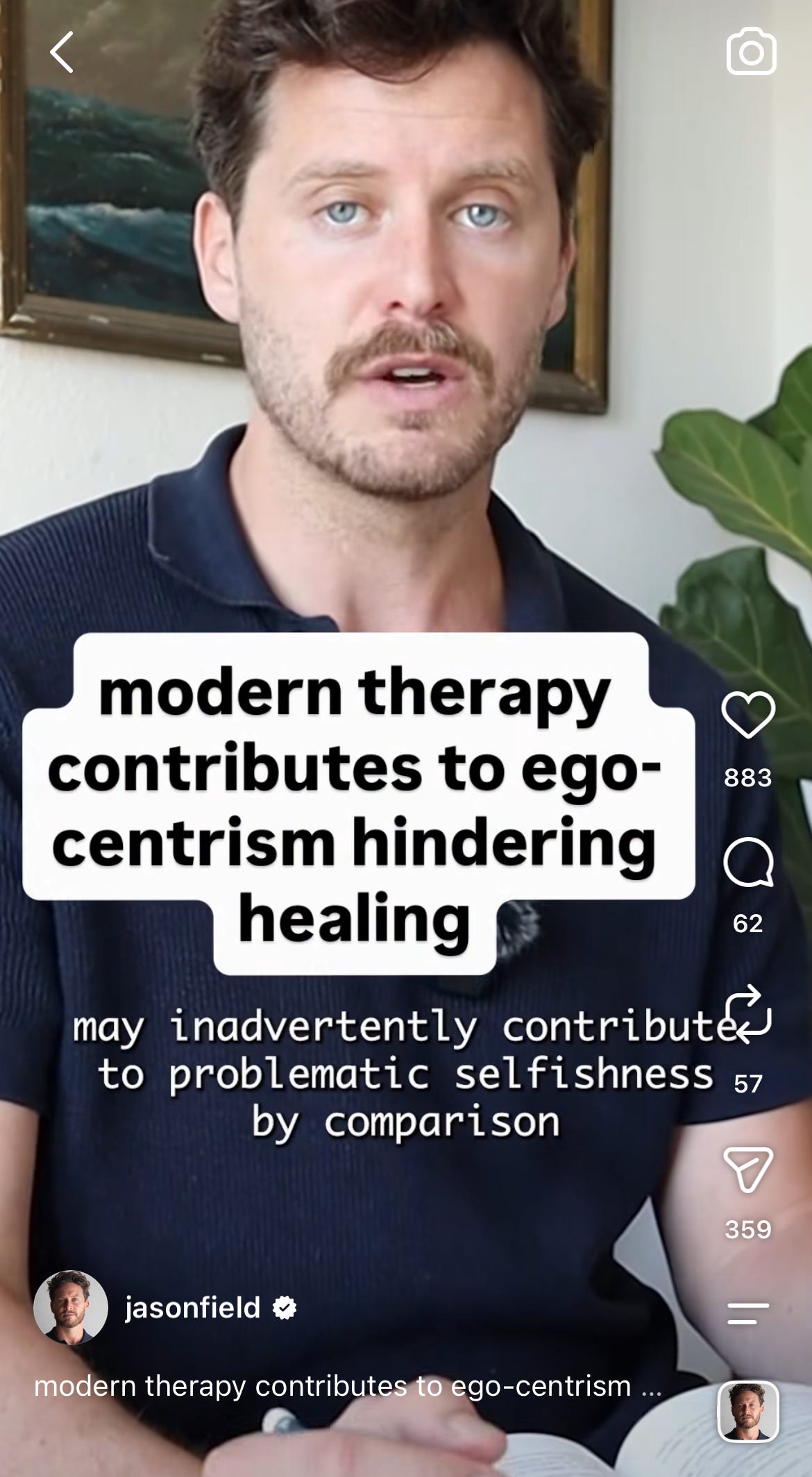
Lastly, we place modern therapy into the spotlight. What happens after our first few sessions of therapy? We collect our list of things we didn’t receive, that have been finally validated by a social other, and we point at all the people around us and say: ‘It’s your fault, my therapist said….’ Why do we do that? Because our worldview believes that the only barrier to our healing is simply swapping a cognitive cassette tape. We knee-jerk into thinking that part of that process is collecting our dues from others. What that does is boost an already elevated ego, because personal distress scores walk in tandem with ego-centrism; of course they do. At the end of the defence cascade is you versus me, and my body will always choose me. What did every cultural thumb drive in human history do instead? Ask us to domesticate the body. What does that mean today? Take the body to safety. Does that mean we throw out CBT? No, of course not. We simply acknowledge that if we are not safe in our bodies, we are built not to extinguish our fears, because to do so would threaten our chances of survival. As we have shared in the past, simple breathing and compassion exercises before a therapy session add huge benefits.
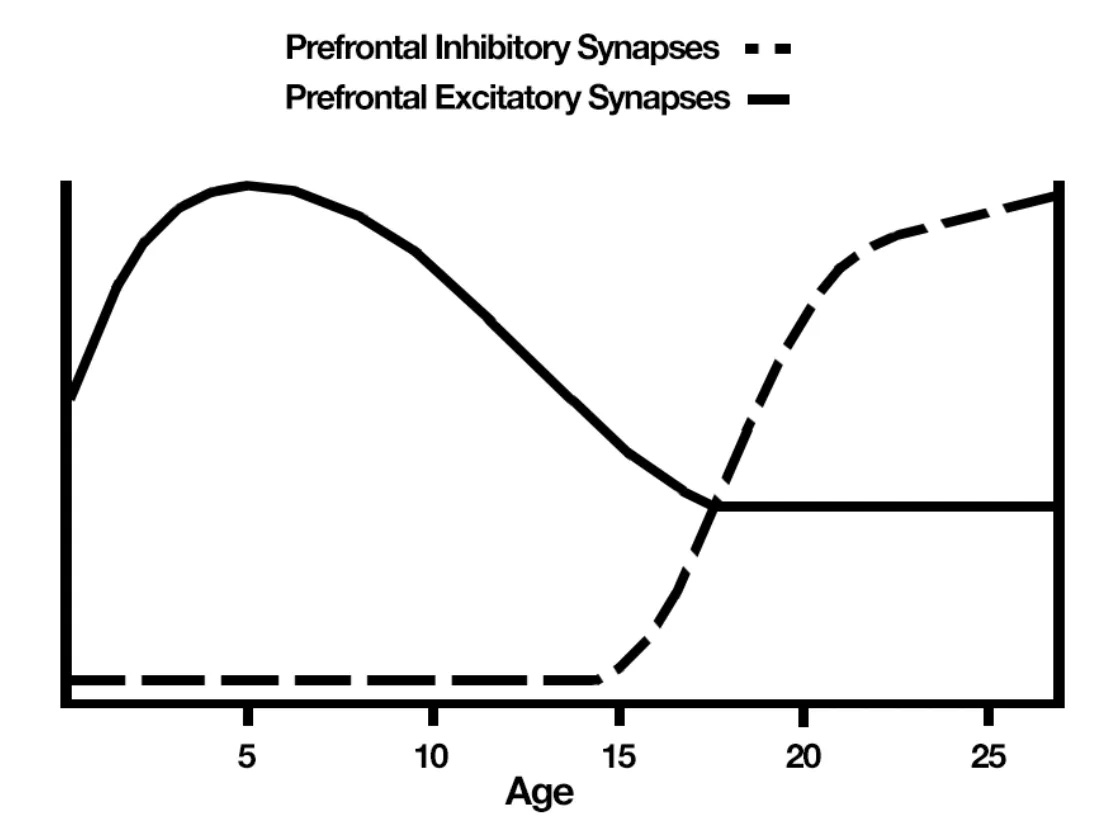
Time for an update on program 3, ‘A Fragile Elevation.’ Let’s talk excitatory synapses. When we are children, we are human hoovers. Soaking everything in. As we prove through sustained safety and successful overcoming of obstacles that excitatory synapses are no longer needed, they are pruned. Simultaneously, inhibitory synapses increase, and in the third decade of our life we settle into a calm rhythm.
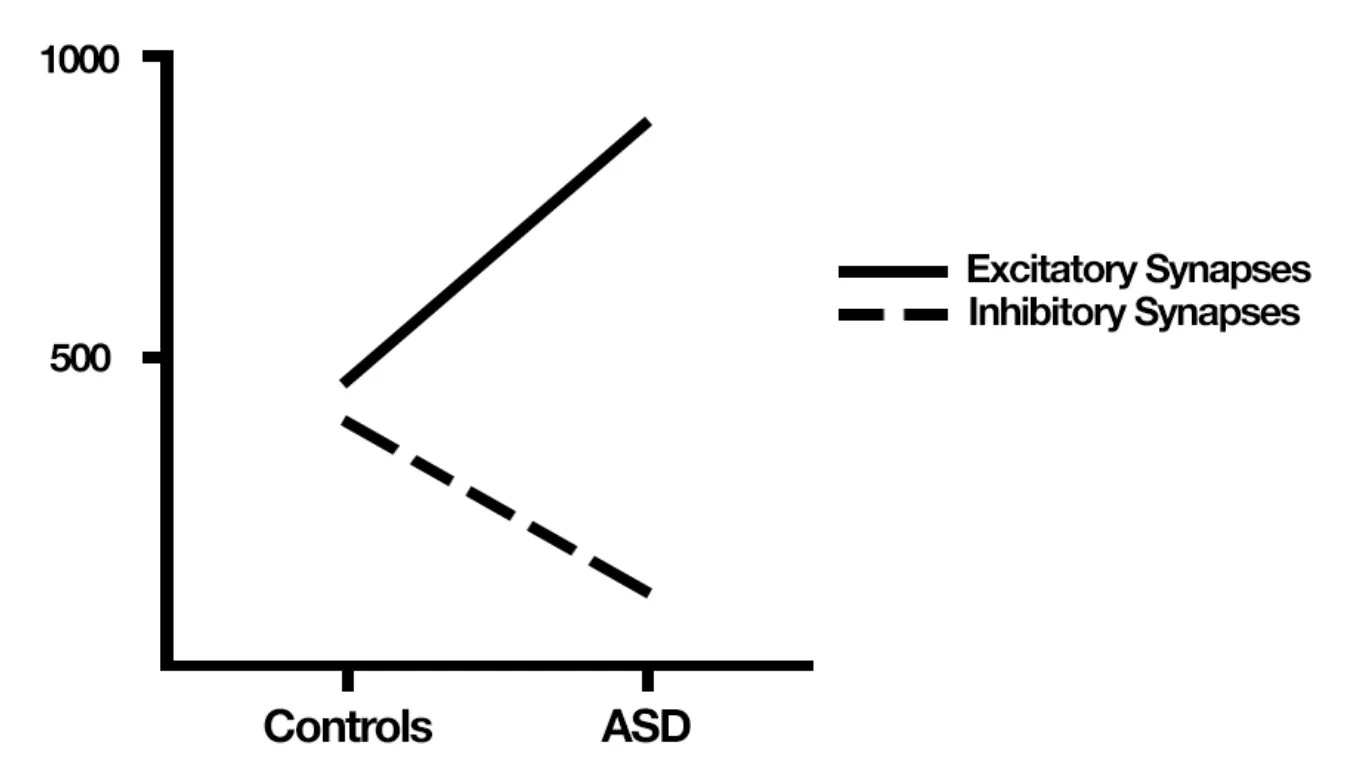
What impairs this process? Of course, the opposite. Non-safety and defeat. How might that come about? One pathway: IL-6. This inflammatory cytokine runs around our brain and increases excitatory synapses. Who has a lot of these?
People with autism.
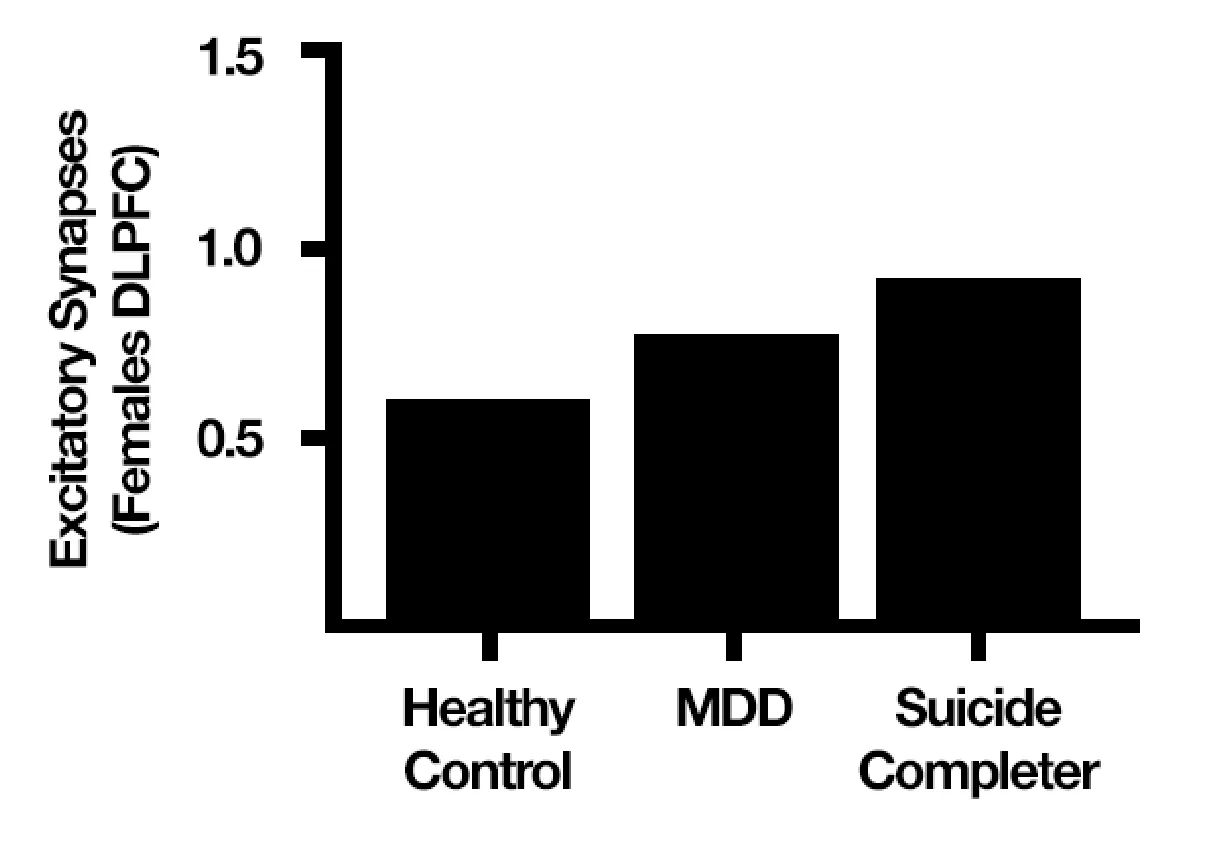
People with depression, and sadly, people who committed su____.
Can these excitatory synapses be removed later in life? Sure can. Take the body to safety. They are experience-dependent. What might prevent that? For men, low testosterone. We’ll cover that pathway another time, but what’s important to realise is that testosterone levels during adolescence are inversely associated with anxiety and depression symptoms. Testosterone levels are also in secular decline. A 70-year-old man in the 1980s has the same testosterone as a 19-year-old man today.
Our current worldview tells young boys that perhaps they are girls.
Our current world view thinks testosterone is toxic.
Our current world view thinks care is allowing the proliferation of excitatory synapses that are overly represented in post-mortem studies of people who have taken their own lives.
It’s time to wake up. Particularly if our career is in the care industry where we have the professional and moral obligation to alleviate human suffering. Not cheerlead it.
Over to Monday Meditation. We had a brief chat on the influence of vitamin D before practising some nasal breathing and exploring what’s on the other side of that.

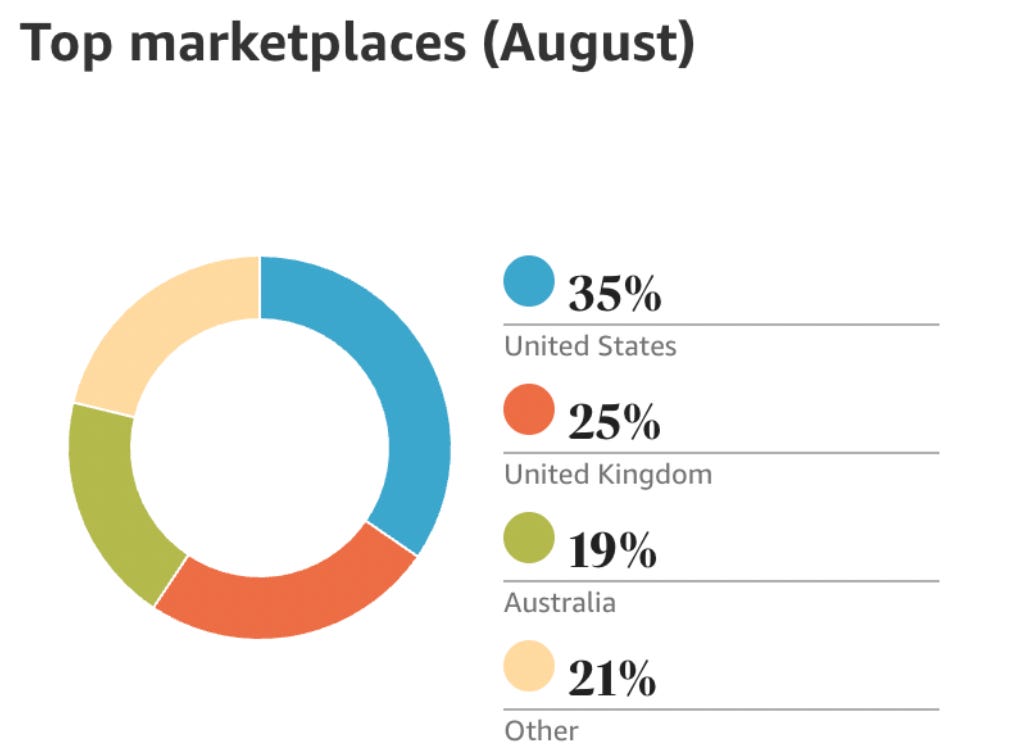
Lastly, country rankings. The yanks move into top spot. The brits follow in second. The aussies fall back to third place so far this month. As always, to all new entrants, welcome. I hope the material serves you and your village well 🥇🇺🇸🥈🇬🇧🥉🇦🇺
I’ll leave it there for now.
Here’s to your healing 💙,
Jas